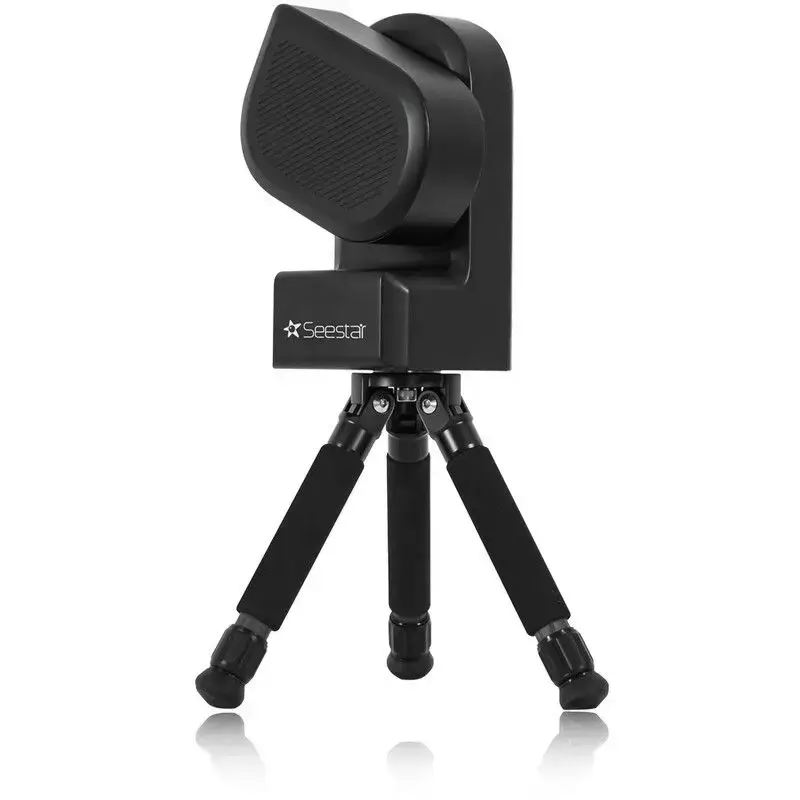
Jeg har netop bestilt mit ZWO Seestar S50 og glæder mig meget til at begynde min rejse som amatør-astrofotograf. Jeg har fået en stadigt større interesse for astronomi det seneste år, og jeg håber, at dette startkit kan hjælpe mig med at udvikle både mine ambitioner og færdigheder inden for udforskningen af dette fascinerende emne. Jeg har de sidste tyve år været en passioneret stillfotograf, så konceptet med at indfange imponerende øjeblikke og smukke motiver er ikke nyt for mig. Sådan bruges den: Åbn appen → gå til hovedskærmen med observationsfunktioner, vejrinformation, månefase m.m. Vælg en tilstand, f.eks. deep-sky, stjernekiggeri, Månen eller Solen (med korrekt solfilter). Vælg et objekt i appen — Seestar vil automatisk dreje hen mod objektet og følge det ved hjælp af plate solving og sin motoriserede montering. Kameraet optager en serie billeder, som softwaren “stacker” for at reducere støj og fremhæve svage detaljer i tåger, stjernehobe og galakser. Da monteringen er alt-azimutal, er de enkelte eksponeringer korte (omkring 10 sekunder), men ved at samle mange billeder opnås resultater i høj kvalitet. Du kan også tage landskabsbilleder i dagslys ved hjælp af dag-tilstanden.